

A recurring expense comes back over time, but its amount can change. To track services you buy for work, record the supplier, frequency, known amount or amount to check, and next relevant date. Keep the comparison between subscriptions separate from the payment calendar. An annual licence may represent €50 a month for comparison while requiring one €600 payment.
The aim is to understand what you keep buying, when you need to pay and what has changed since the previous period.
This guide, also as a PDF
Subscribe to the newsletter: once you confirm from the link in the email, the PDF guide opens.
This site is protected by reCAPTCHA and the Google Privacy Policy and Google Terms apply.

Recurring and fixed describe different things
A monthly subscription may have a stable price; an annual licence may recur once a year; a usage-based service may produce a different bill each month. Recurrence tells you that the item repeats, not that its amount will always be identical.
For each service, check both its frequency and how the amount is formed: a base fee, additional users, usage or other agreed components. The fact that an expense repeats does not tell you whether its latest bill has been paid either.
Start with services actually purchased for your business. Employee expense claims and reimbursements need a different type of check. Here we are following suppliers and periodic services.
One row per service, with documents and payments linked
Prepare a simple register in which each service is recognisable. Include the supplier, person responsible for checking it, reference to the terms, period covered, frequency and amount. Add the payment due date and the next date to review the purchase.
For variable amounts, distinguish what is already known from an estimate. If you receive an invoice and payment confirmation for the same period, link them to the entry: they are not two purchases to add together. Keep the documents explaining the amount and the payment record that settles it.
The person responsible internally should be able to find what they need without starting again from the bank statement: which service is in use, on what terms and who can decide whether to keep it.
Three services, two ways to read the amounts
Take an agency and three hypothetical purchases for 2027. All figures are final cash amounts, including VAT where due. We are not calculating taxes or deductions.
| Service purchased | Frequency and amount in the example | Payment | How to use it in a monthly comparison |
|---|---|---|---|
| A, subscription | €60 a month | During the same month | €60 |
| B, annual licence | €600 for twelve months | One payment in May | €600 ÷ 12 = €50 |
| C, usage-based service | Variable amount | €40 in January and €70 in February | Keep usage separate from the known part |
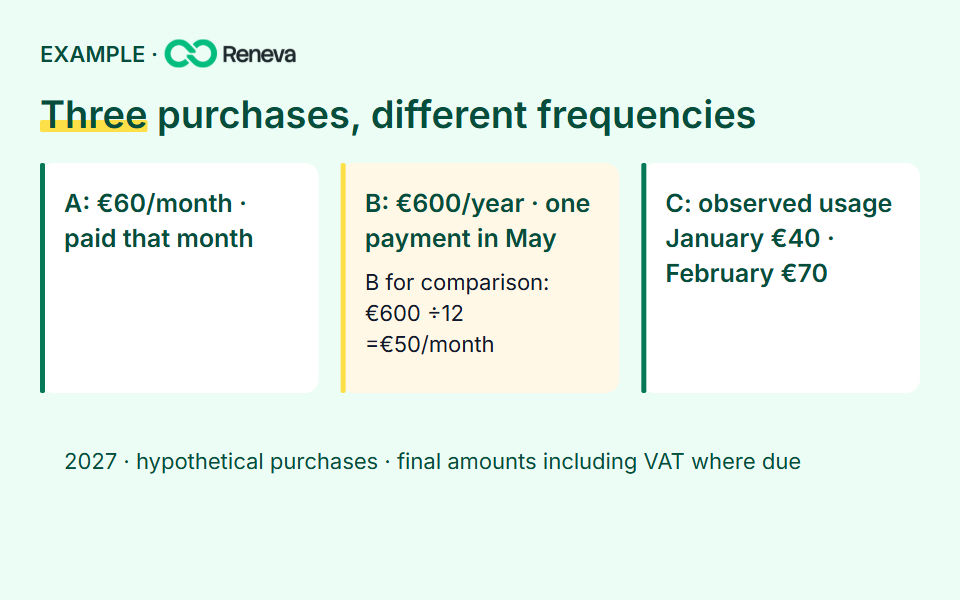
For the known part, A plus B represent €60 + €50 = €110 a month. B's €50 is an allocation for comparison. It does not mean you are paying B in twelve instalments.
To know what money actually goes out, use the dates in the example. B is not yet due in January or February; its €600 payment falls in May.
| View of the example | January 2027 | February 2027 |
|---|---|---|
| Monthly comparison basis for A and B | €110 | €110 |
| C, usage observed and paid for | €40 | €70 |
| Descriptive comparison of A, B and C | €150 | €180 |
| Actual payments that month, A plus C | €100 | €130 |
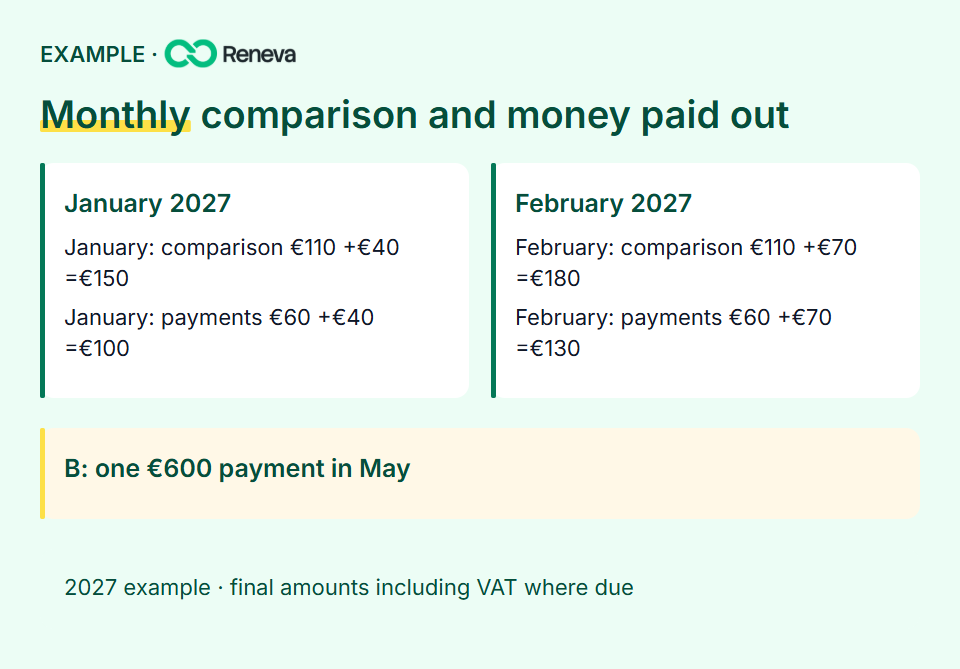
The €150 and €180 put the known part alongside usage observed in those two months. They are not a certain forecast of future usage. The €100 and €130 describe payments in those months, without the €600 annual payment still to come.
In the payment calendar, B must appear once, for €600 in May. Adding twelve €50 payments as well would count the purchase twice. A cash flow forecast can bring these dates together with other inflows and outflows, keeping the actual dates of expected payments.
When an amount changes, find out why
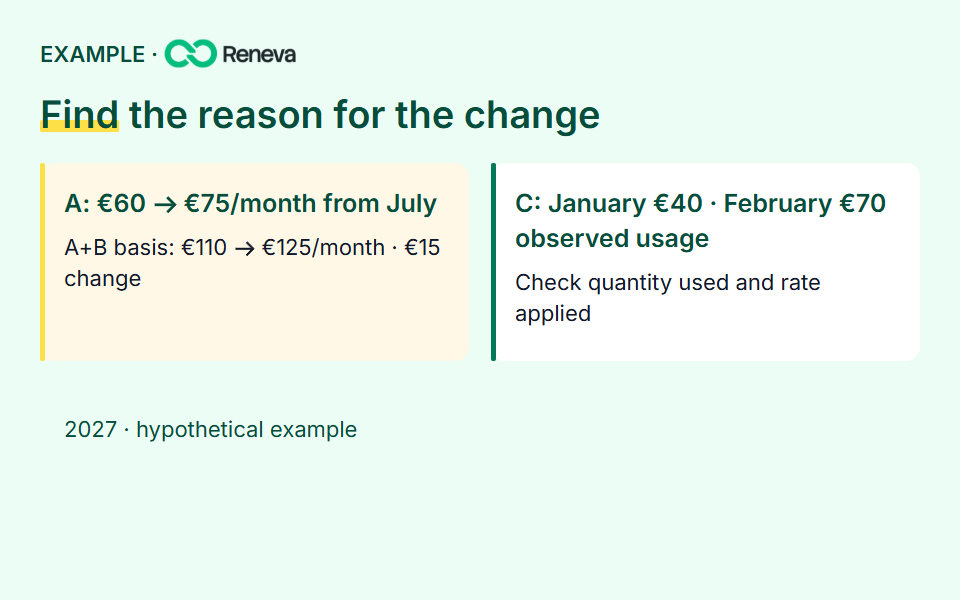
Suppose A's price is agreed at €75 a month from July 2027. From that date, the known monthly basis for A and B becomes €75 + €50 = €125, up €15 from the original €110.
Record when the change takes effect and keep the history. The new price does not alter January and February payments. Check the terms explaining the increase and update the relevant amounts for later periods.
For C, the move from €40 to €70 in our example comes from observed usage. Before changing the estimate, check the quantity used and rate applied. One €70 month is not enough to set €70 automatically for every other month.
This distinction helps you decide what to check: a different rate, more use, an additional user or another invoice component.
Review usefulness and the next decision
Before renewal, ask who uses the service and for which work. Compare its inclusions with current needs and look for duplication with other purchases. Consider what changing it would involve too: materials to transfer, access, settings or work by the people using it.
The useful decision date may come before the next payment. Gather the actual renewal terms and assign the check to someone. The guide to organising an automatic renewal reminder helps distinguish the deadline to act from the charge date.
If you use Reneva, Recurrence and Start date let you set an expense's due dates. A forecast future due date remains distinct from a recorded payment. The recurring and planned expenses guide explains how to follow them.
If you decide to stop a service, complete the procedure required by the arrangement with the supplier and keep the relevant confirmation. Then update your register and due dates. Archiving an entry in your management software does not, by itself, communicate the decision to the supplier.
At the next check, you should be able to recognise what repeats, which amount is known, what remains variable and when the next decision is needed.


