

A retainer is an arrangement in which a client pays a regular fee for a defined set of services, deliverables or reserved availability. An agency might, for example, set aside ten hours each month to maintain a website’s content. The client knows what is included, and the agency knows what time to reserve.
The name alone tells you little about what you are selling. In the support retainer described by Netsu, the unit is a monthly allocation of hours. You could instead agree specific deliverables, such as two newsletters, or availability with clear limits. Choose the unit before setting the fee: ten hours, two deliverables and support on request are different commitments.
This guide, also as a PDF
Subscribe to the newsletter: once you confirm from the link in the email, the PDF guide opens.
This site is protected by reCAPTCHA and the Google Privacy Policy and Google Terms apply.

What the client buys each month
If you sell hours, explain which activities use them: preparation, meetings, delivery and revisions. If you sell deliverables, describe the content, format and revision rounds included. If you sell availability, say when you accept requests, how you confirm that you will handle them and what capacity you reserve.
Priority needs a concrete explanation. “Priority support” leaves a useful question unanswered: priority over what? Agree who orders requests and how you assess a new urgent task against work already approved. Distinguish the time you take to respond from the date you will deliver the work.
The client also needs to know which materials to supply and who can approve activities. When two people send conflicting requests, a named client contact needs to decide which takes precedence.
A service outline to discuss
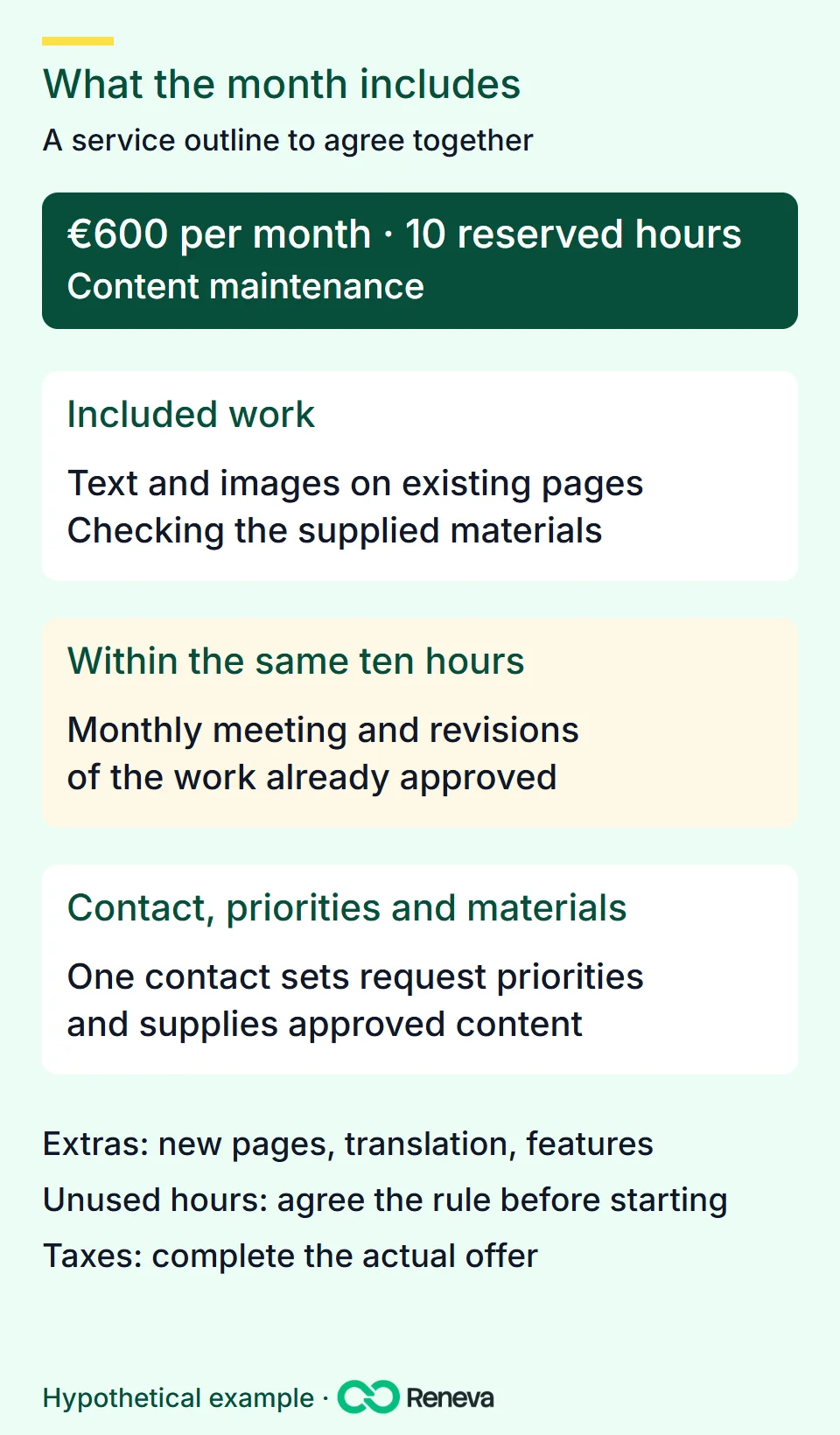
This outline is a hypothetical example for discussion, with invented amounts. It describes the service; it is neither a contract ready to sign nor a recommended price.
| Item | Proposal to agree |
|---|---|
| Period and fee | €600 per month for 10 reserved hours. Specify the tax treatment in the actual offer. |
| Activities | Update text and images on existing pages; check the materials supplied. |
| Meeting and revisions | One monthly meeting and revisions to approved activities use the same 10 hours. |
| Contact and materials | One client contact prioritises requests and supplies approved text and images. |
| Priority | Planned activities have an agreed order. A new urgent request means reviewing that order together. |
| Excluded work | New pages, translations and feature development require a separate proposal. |
| Beyond 10 hours | Before starting, agree an additional fee, replace an activity or move the request to a later period. |
| Unused hours | Choose and record the rule before starting: whether hours carry over, any limits and expiry, or whether the allocation ends with the period. |
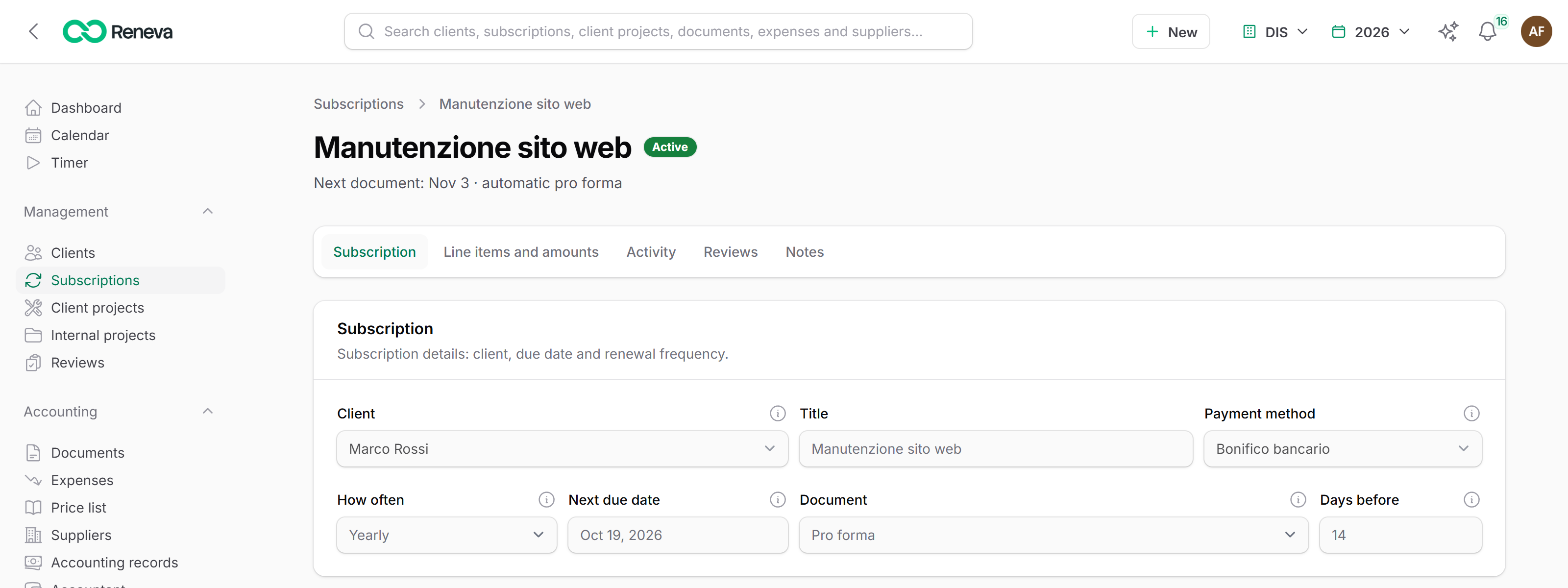
In Reneva, a Subscription organises the recurring part of the service: client, frequency, next due date and the line items the client pays for. The Guide to creating a subscription walks through that step. Keep the agreed service description alongside it: that is where you define priorities, materials, additional work and unused hours.
Month A: requests fill the available hours
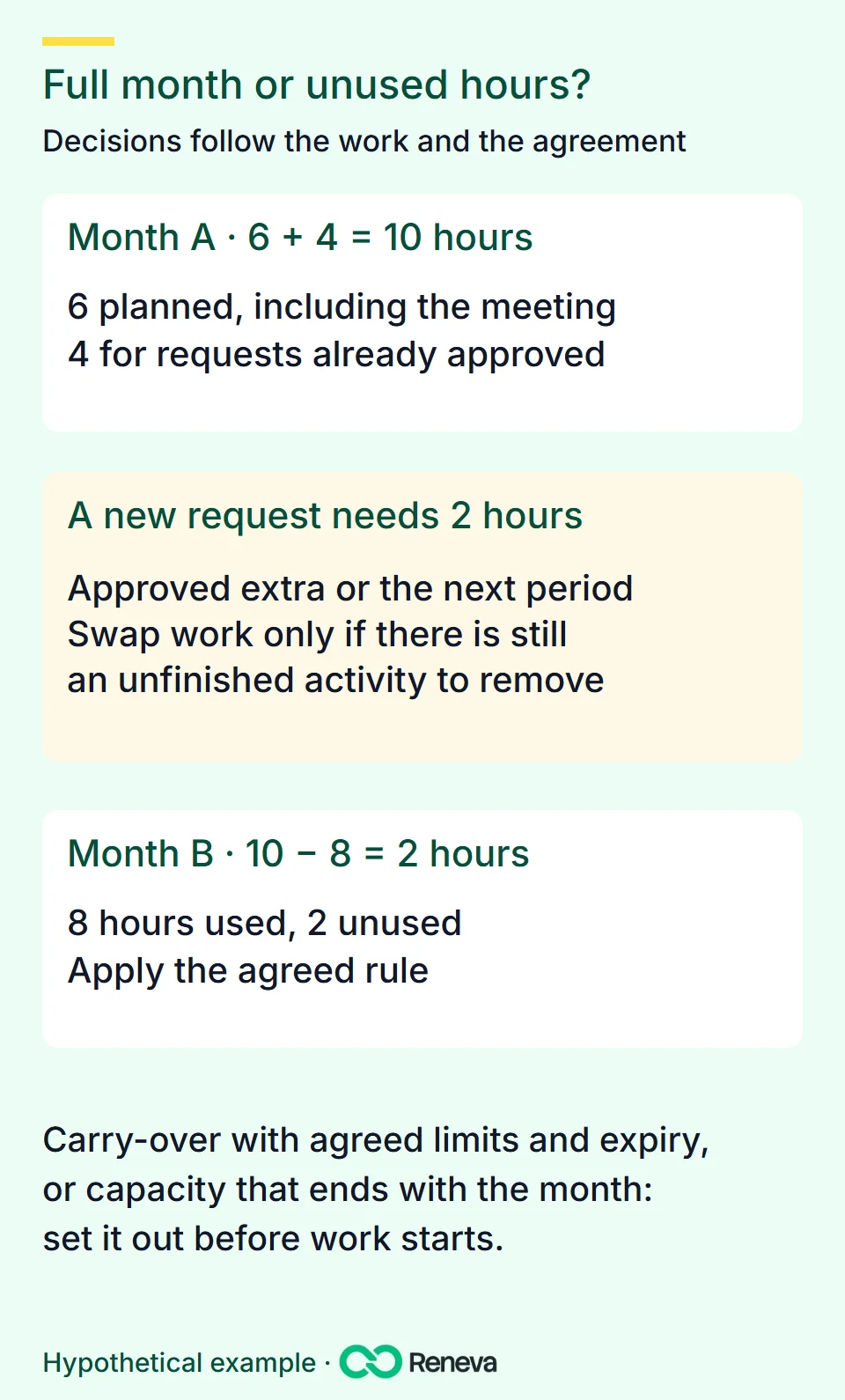
In our example, six hours go to planned activities, including the meeting, and four go to additional requests already approved. The total is 6 + 4 = 10 hours: the month’s capacity is full.
Another request arrives, estimated at two hours. Before doing it, make the choice clear to the client contact: “We estimate two hours for this change. We can agree an additional fee, replace an activity that has not yet been done, or schedule it for next month. Which would you prefer?”
Replacing an activity is only possible if there is still something to remove. If all ten hours have already been worked, the options to discuss are additional work or postponement. Planned time and completed work describe different situations.
Month B: eight hours are used
In the second month, the work takes eight hours. The two remaining hours follow the rule in the agreement. The word retainer does not determine whether they become a credit, expire or change the fee.
If you agreed to carry hours over, record how many move to the next period and how long they remain available. If the service reserves capacity that ends with the month, explain that condition in the proposal. If the point is still unresolved, discuss it before treating those hours as available or lost.
Keep the fee, document and payment separate
At the end of the month, record the work completed, postponed requests and any remaining capacity under the agreement. For the financial side, distinguish the expected fee, the document created and the payment received. A €600 monthly fee describes the client’s financial commitment; confirming what you have received requires a payment check.
Next, review the coming month together: which activities take priority, which materials are missing and whether the agreed service still matches the requests.


