To write a freelance quote, set out what you will deliver, the price of each activity and the terms of the work. Your client needs to understand the result, timing, included revisions and payments. You need a clear boundary for the assignment.
Use the example below as a starting point, then adapt its choices to the project before discussing them with your client.
This guide, also as a PDF
Subscribe to the newsletter: once you confirm from the link in the email, the PDF guide opens.
This site is protected by reCAPTCHA and the Google Privacy Policy and Google Terms apply.

A completed freelance quote example
The names, amounts and terms are hypothetical. The fees are not market rates or Reneva prices.
Quote P-01, version 1, dated 5 November 2026
Prepared by: Laura Bianchi. Client: Studio Quercia. Project: three sections of copy for a web page introducing a service.
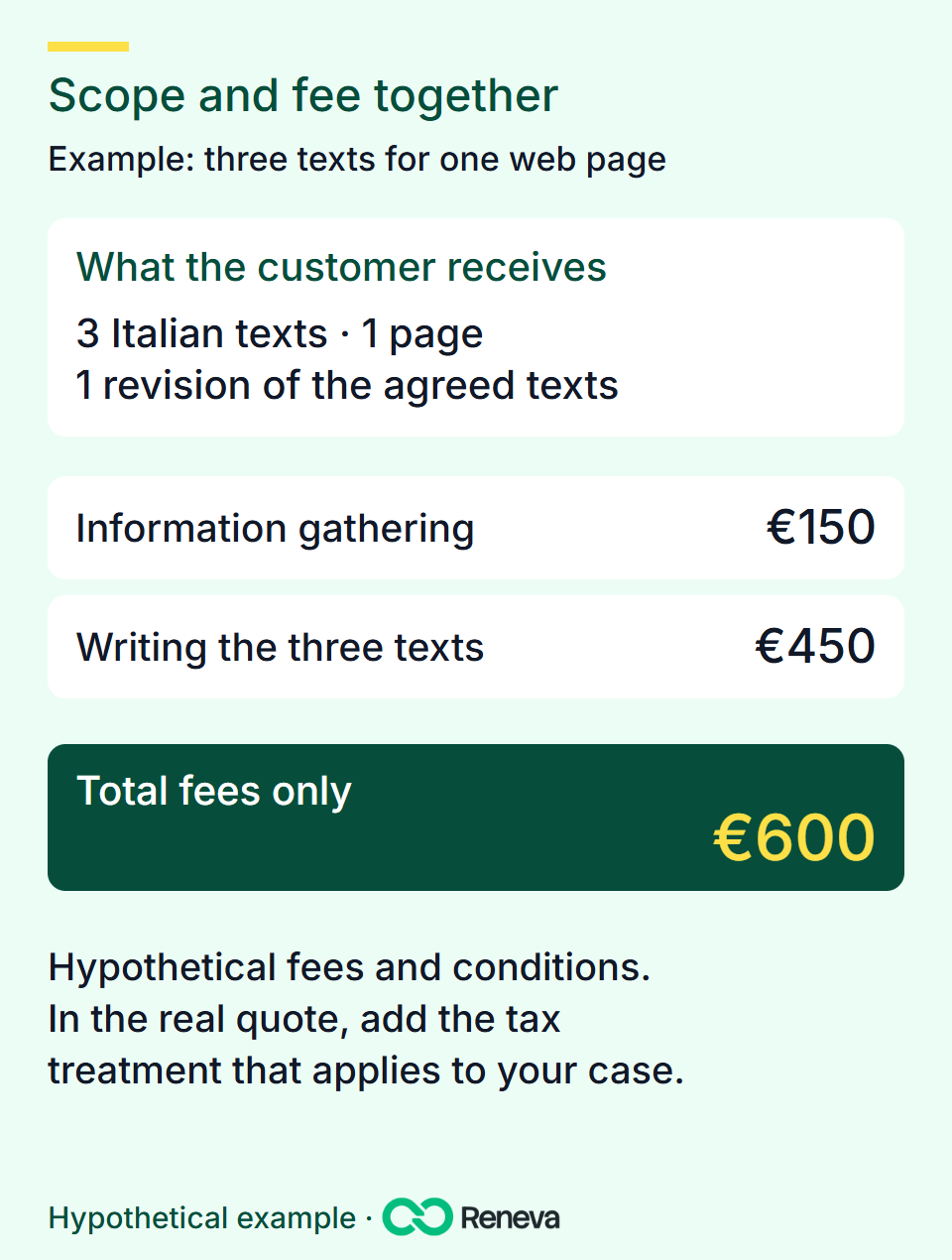
The deliverable is three sections of Italian copy: a service introduction, an explanation of the working method and an invitation to get in touch, supplied in one editable document. Before work begins, the client provides information about the service, audience and preferred tone, plus reference materials.
| Activity | Quantity | Unit price | Fee |
|---|---|---|---|
| Gathering and organising information | 1 | €150 | €150 |
| Writing the three agreed sections | 3 | €150 | €450 |
| Total fees | €600 |
In a real quote, apply the tax treatment relevant to your circumstances to establish the actual amount payable. The €600 in this example covers fees only.
The other proposed terms are:
- First draft within ten working days after acceptance, the advance payment and all requested materials have arrived.
- One revision of the three sections, with all feedback sent in a single reply within seven days of the first draft. The revised version is delivered within three working days of receiving the complete feedback.
- Translation, additional copy and uploading the text to the website are excluded.
- €300 in advance before work begins, and the €300 balance within seven days of delivery of the revised version. If the client approves the copy without changes, the balance is due within seven days of approval. These amounts also cover fees only; the real document must state the actual sums due.
- The proposal is valid until 19 November 2026. To accept, the client confirms quote P-01, version 1, and its terms in writing.
These are possible agreements, not compulsory rules for every freelancer. In the example, client and writer also agree how to handle feedback received after the deadline before resuming the work.
Download the quote template
The quote in this example is also a free template: download quote-for-services-reneva.xlsx. It opens in Excel or LibreOffice, with no sign-up and no email.
- Items. One row per task, with quantity and unit price. Each item can be one-off or monthly recurring: for recurring items you enter the months.
- Totals. One-off fees, recurring fees per month and the total for the job, kept separate. Tax amounts have their own row, because they depend on your tax position and you agree them with your accountant.
- Terms. Deliverable, included revisions, exclusions, deposit and balance, validity and how to accept.
Names and amounts are the made-up ones from the example, not market rates: replace them with your own.
Describe the deliverable before the price
“Website copy” leaves plenty of questions open. How many pages? In which language? Are you writing from scratch or editing existing material? Will you put the copy on the site or supply a document?
Here, the price covers three sections for one page, with a defined deliverable. If the client also asks for a newsletter, you can immediately identify it as additional work.
Before setting your fee, list the activities required: gathering information, producing the work and revising it. Assess the effort and project expenses, then make the proposal's items easy to understand. Discuss the price alongside the deliverable: when the work changes, review the amount too.
In Reneva's Documents, you can create the quote by choosing the client and line items, each with a description, quantity and price. Create and view opens the document so you can check what the client will receive before sharing it.
Define what a revision includes
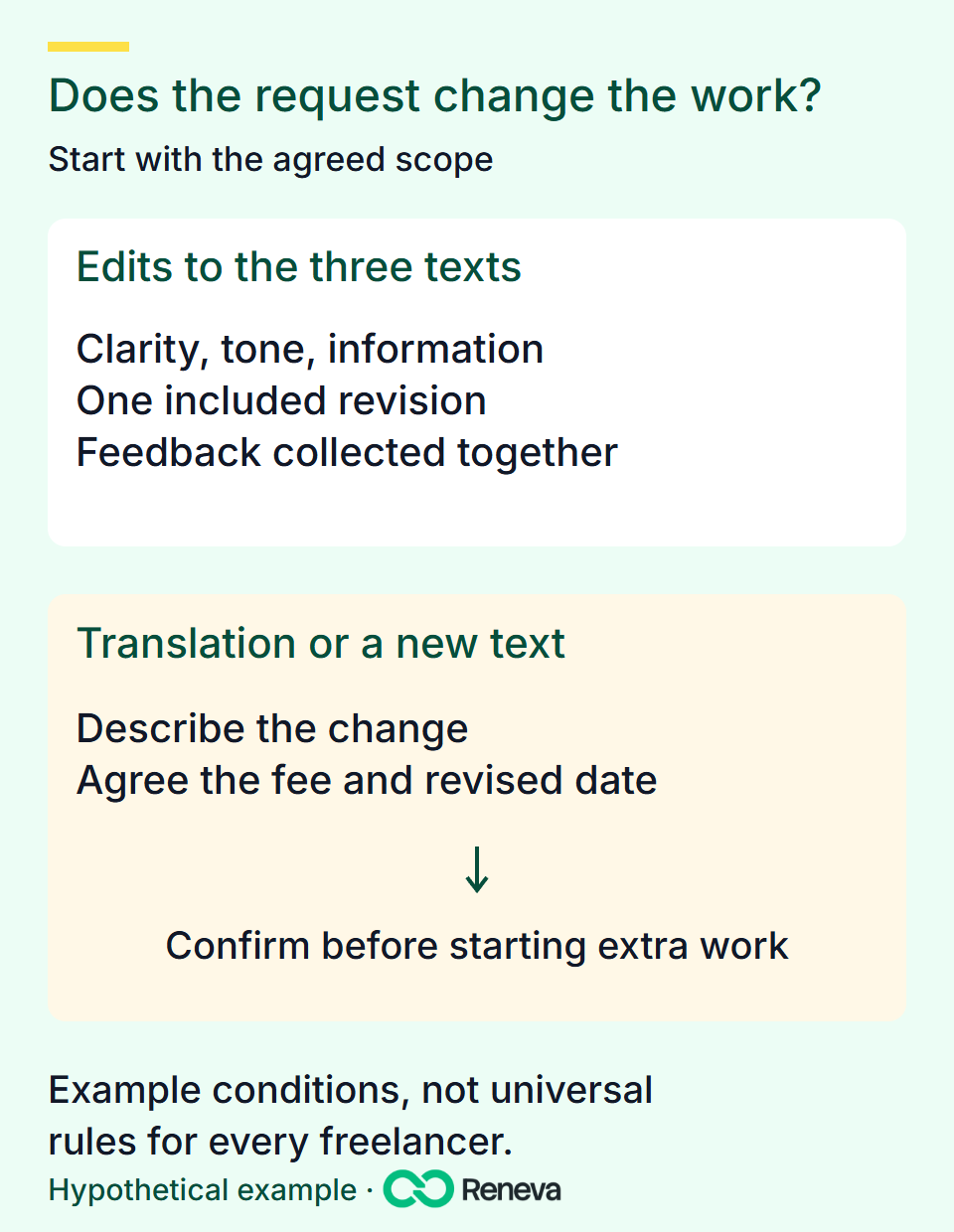
A revision can address the client's feedback on the copy: clarifying a passage, adjusting the tone or updating information. Writing three new sections for another service changes the assignment itself.
“One revision included” is clearer when you explain how feedback should be submitted and which material it covers. In the example, the client sends one reply with comments on all three sections within seven days. This gives you a collected set of instructions rather than changes scattered across messages.
If the client requests a translation, which the proposal excludes, respond with a specific change to the agreement: what you will add, its fee and a new delivery date. Wait for confirmation before doing the additional work. If the change affects an existing deliverable, also state which part of the previous agreement it replaces.
Link your timing to what you need to begin
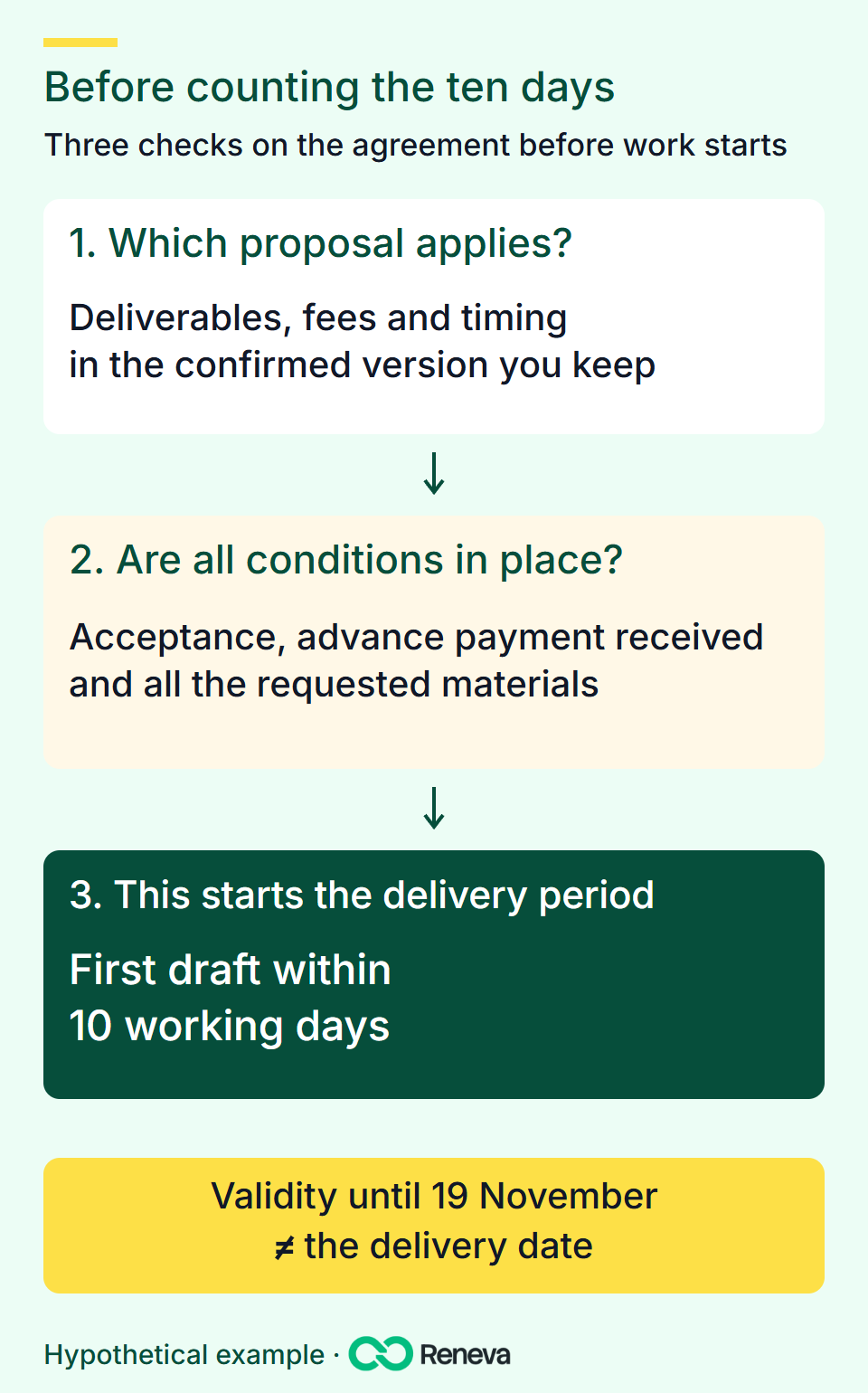
A delivery date can be hard to meet without the materials and answers you need. Specify when the clock starts: this example requires acceptance, the advance payment and complete materials. If information arrives late or incomplete, agree a new schedule before confirming delivery.
The proposal's validity date serves a different purpose: it says how long you are offering those terms. After 19 November, you can review availability, fees and timing with the client. It is not the date you will deliver the copy.
Keep fees and payment terms together. The client should know what to pay before you start, when the balance is due and the actual total payable. If the tax treatment is unclear, settle it with your accountant before sending the quote.
Agree the version before starting
Read the proposal from the client's side: can you understand what you will receive, what you must supply and what you must pay without finding the previous conversation? Put any missing agreement into the document.
When you change the price, deliverables or timing, identify the new version and ask the client to confirm that version. Keep the agreed proposal and later changes so you can find the starting point when a new request arrives.
In Reneva's client portal, you share the quote and the client confirms acceptance of the version shown, which is kept. Before starting, compare that version with the work you are about to do and the materials you have received.